Marine Rubber Tyred Gantry (RTG) cranes operate in some of the harshest industrial environments on earth. Unlike inland container yards, marine terminals expose equipment to a constant combination of salt-laden air, high humidity, temperature fluctuations, and sometimes direct seawater contact. In such conditions, corrosion is not just a maintenance concern—it is a primary threat to structural integrity, operational safety, and long-term economic performance.
This is why anti-corrosion coating is not an optional upgrade for marine RTG cranes, but a fundamental engineering requirement. Without it, even the most robust crane structure will experience accelerated degradation, leading to costly downtime, reduced lifespan, and potential safety risks.
This article explores why anti-corrosion protection is critical for marine rubber tyred gantry crane for sale, how corrosion develops in coastal environments, and what coating systems are typically used to ensure long-term reliability.
1. The Harsh Reality of Marine Environments
Marine RTG cranes are typically used in seaports, shipyards, and coastal logistics hubs. These locations share a common environmental profile:
- High salinity in the air (salt aerosols)
- Constant humidity above 70–80%
- Frequent rain and condensation cycles
- Strong ultraviolet (UV) radiation
- Occasional direct seawater splash or flooding
- Temperature variation between day and night
Salt is the most aggressive factor. Chloride ions penetrate protective metal oxide layers and accelerate electrochemical reactions on steel surfaces. Once corrosion begins, it spreads rapidly—especially in structural joints, weld seams, and bolt connections.
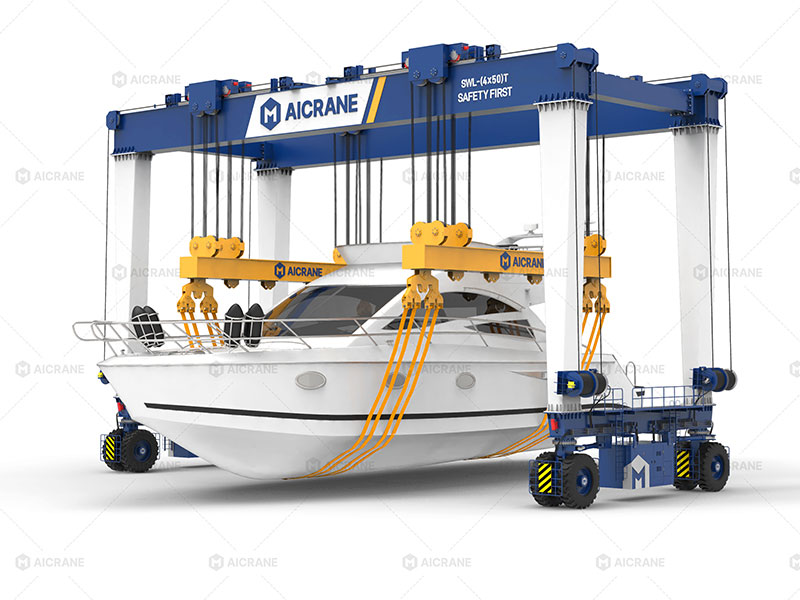
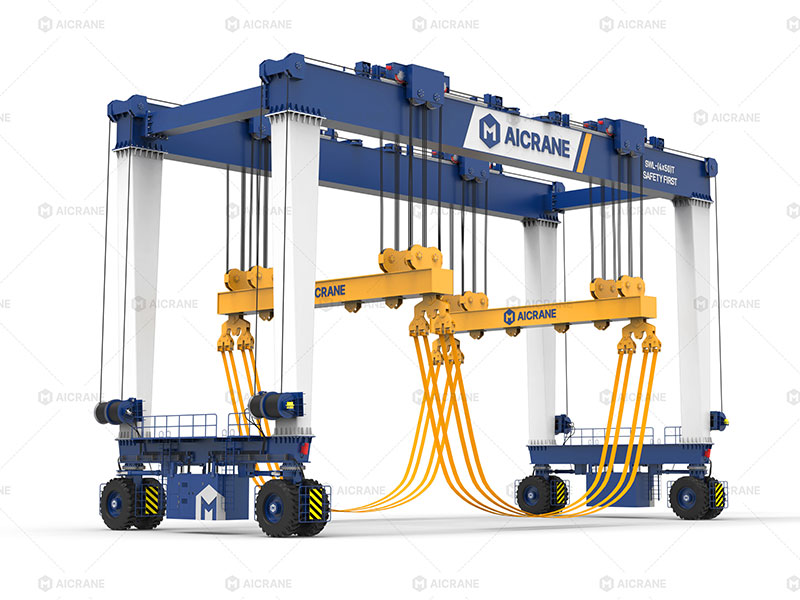
In a marine RTG crane such as boat travel lift, large surface areas such as steel legs, gantry beams, trolley frames, and wheel assemblies are all exposed. Without proper protection, corrosion can begin within months and become structurally significant within a few years.
2. Why Rubber Tyred Gantry Cranes Are Especially Vulnerable
Unlike fixed steel structures, RTG cranes are mobile machines. This mobility introduces additional corrosion risks:
2.1 Constant Mechanical Stress
RTG cranes are continuously subjected to:
- Dynamic loading during container handling
- Vibration during travel
- Torsional forces from steering systems
These stresses create micro-cracks in coatings over time, allowing moisture and oxygen to penetrate and reach the steel surface.
2.2 Complex Structural Geometry
RTG cranes include:
- Box girders
- Welded joints
- Cable trays
- Ladder systems
- Hydraulic and electrical enclosures
These complex geometries make uniform coating application difficult. Hidden corners and joints are especially prone to coating failure and corrosion initiation.
2.3 Wheel and Underframe Exposure
Since RTGs move on rubber tires, the lower structure is constantly exposed to:
- Wet ground surfaces
- Standing water
- Oil and chemical residues in port yards
This creates a persistent corrosion zone in the undercarriage system.
3. How Corrosion Affects Crane Performance and Safety
Corrosion is often seen as a cosmetic issue at first, but in heavy lifting equipment like marine RTGs, its impact is far more serious.
3.1 Structural Weakening
Steel corrosion leads to:
- Reduced cross-sectional thickness
- Loss of load-bearing capacity
- Increased risk of fatigue failure
Over time, this can compromise critical structural elements such as gantry legs or main girders.
3.2 Mechanical System Failure
Corrosion can damage:
- Wheel assemblies
- Slewing bearings
- Hydraulic cylinders
- Electrical enclosures
Once corrosion reaches moving parts, it increases friction, reduces efficiency, and accelerates wear.
3.3 Electrical System Risks
Marine environments often cause:
- Terminal oxidation
- Cable insulation degradation
- Short circuits due to moisture ingress
This can lead to unexpected shutdowns or safety hazards.
3.4 Increased Maintenance Costs
Without proper anti-corrosion protection:
- Frequent repainting is required
- Spare part replacement cycles shorten
- Unplanned downtime increases
Over a 10–20 year lifecycle, these costs can far exceed the initial investment in high-quality coating systems.
4. The Science Behind Anti-Corrosion Coating Systems
Anti-corrosion coatings work by creating a barrier between steel and the corrosive environment. In marine or shipyard cranes, advanced multi-layer systems are typically used.
4.1 Surface Preparation (Most Critical Step)
Before coating, steel surfaces must be treated using:
- Sandblasting (Sa 2.5 or Sa 3 standard)
- Degreasing and cleaning
- Removal of mill scale and rust
Poor surface preparation is the leading cause of coating failure.
4.2 Primer Layer
The primer is the first protective barrier. It usually contains:
- Zinc-rich epoxy or inorganic zinc silicate
- Strong adhesion properties
- Cathodic protection effect
This layer slows down corrosion even if the top layers are damaged.
4.3 Intermediate Coating
This layer adds:
- Thickness to the coating system
- Barrier against moisture penetration
- Chemical resistance
Epoxy-based coatings are commonly used at this stage.
4.4 Topcoat Layer
The top layer provides:
- UV resistance
- Weather protection
- Color durability and visibility
Polyurethane coatings are widely used because they resist sunlight degradation and maintain gloss for longer periods.
5. Special Requirements for Marine RTG Cranes
Marine RTGs require more stringent coating specifications compared to standard yard cranes.
5.1 Higher Salt Resistance Standards
Coating systems must withstand:
- Salt spray testing (often 1000–3000+ hours)
- Continuous chloride exposure
5.2 Enhanced Film Thickness
Typical total dry film thickness (DFT) may range:
- 200–400 microns for standard gantry cranes
- 300–600+ microns for marine applications
5.3 Sealing of Welds and Edges
Edges and welds are the first points of corrosion. Therefore:
- Edge rounding is required
- Extra stripe coating is applied
- Weld seams receive additional sealing layers
6. Lifecycle Benefits of Anti-Corrosion Protection
Investing in high-performance coating systems provides long-term advantages:
6.1 Extended Service Life
Properly coated marine RTGs can operate reliably for 20–30 years with controlled maintenance.
6.2 Reduced Maintenance Frequency
High-quality coatings significantly reduce:
- Repainting cycles
- Structural repairs
- Emergency maintenance events
6.3 Improved Safety
By preventing structural weakening and electrical failures, coatings contribute directly to operational safety.
6.4 Higher Asset Value
Well-maintained cranes retain higher resale value and better operational reputation.
7. Maintenance Still Matters: Coating Is Not Permanent
Even the best coating system requires maintenance. Operators should implement:
- Annual visual inspections
- Touch-up coating on damaged areas
- Regular cleaning to remove salt deposits
- Monitoring of high-wear zones (wheels, joints, ladders)
Preventive maintenance ensures the coating system performs as designed throughout the crane’s lifecycle.
8. Conclusion
In marine environments, corrosion is not a slow inconvenience—it is an aggressive, continuous chemical process that directly threatens the reliability of Rubber Tyred Gantry cranes. Because these cranes are essential for container handling in ports and shipyards, any downtime or structural issue can have significant operational and financial consequences.
Anti-corrosion coating is therefore a critical engineering safeguard. Through proper surface preparation, multi-layer protective systems, and regular maintenance, marine RTG cranes can withstand harsh coastal conditions and maintain long-term performance.
Ultimately, investing in high-quality anti-corrosion protection is not just about preserving steel—it is about ensuring safety, operational efficiency, and long-term profitability in one of the most demanding industrial environments in the world.