As global trade volumes continue to grow, container ports and logistics hubs are under increasing pressure to expand capacity while reducing their environmental footprint. Container gantry cranes – whether rail-mounted gantry (RMG) cranes, rubber-tyred gantry (RTG) cranes, or ship-to-shore (STS) cranes—play a critical role in container handling efficiency. However, their large scale, high energy consumption, and long service life also make them a focal point of sustainability challenges in modern port infrastructure.
Designing container gantry cranes today is no longer just about lifting capacity, span, or operating speed. Sustainability has become a central consideration, influencing structural design, power systems, material selection, control technologies, and lifecycle management. This article explores the key sustainability challenges facing modern container gantry crane design and how manufacturers and port operators are addressing them.
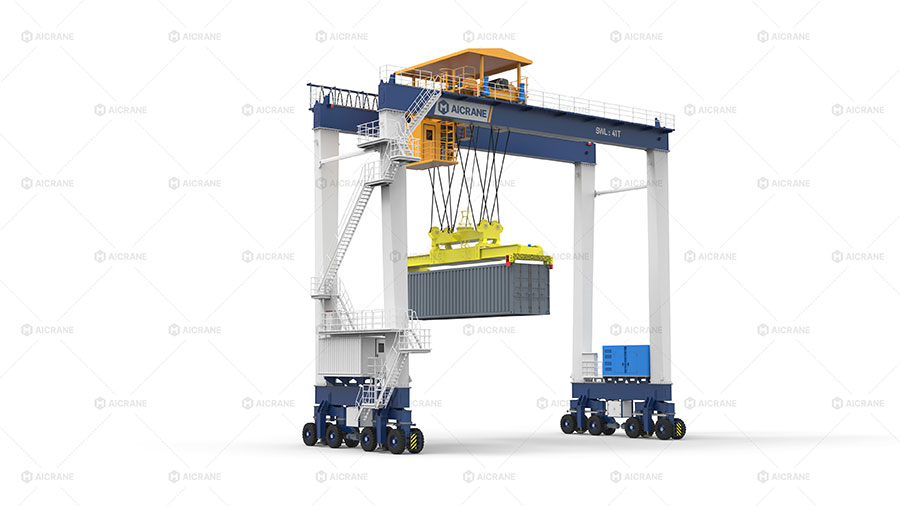
1. High Energy Consumption and Power Efficiency
One of the most significant sustainability challenges in container gantry crane design is energy consumption. Gantry cranes operate continuously in busy container yards, performing hoisting, trolley travel, and gantry travel operations that demand substantial electrical power or fuel.
Traditional diesel-powered RTGs, in particular, consume large amounts of fuel and generate significant CO₂ emissions. Even electric gantry cranes, while cleaner at the point of use, still place heavy loads on port power infrastructure. Designers must balance high performance with reduced energy demand.
Modern crane designs address this challenge through:
-
High-efficiency motors and variable frequency drives (VFDs)
-
Optimized hoisting and trolley mechanisms
-
Regenerative braking systems that feed energy back into the grid
-
Smart power management systems that reduce idle energy losses
Despite these advancements, achieving meaningful energy reductions without compromising productivity remains a major design challenge.
2. Carbon Emissions and Decarbonization Pressure
Global ports are increasingly subject to national and international decarbonization targets. Container gantry cranes, as large energy consumers, are directly affected by these policies. Reducing greenhouse gas emissions is no longer optional – it is a strategic requirement.
The transition from diesel RTGs to electric RTGs (e-RTGs) or hybrid systems presents several challenges:
-
Higher initial investment costs
-
Infrastructure upgrades for power supply
-
Operational disruptions during conversion
-
Compatibility with existing yard layouts
Crane designers must create systems that support electrification while remaining flexible enough to operate in ports at different stages of energy transition. Designing cranes that can later be retrofitted for full electrification is now a key sustainability consideration.
3. Material Selection and Environmental Impact
Container gantry cranes are massive steel structures designed for service lives of 20 to 40 years or more. The environmental impact of producing, transporting, and fabricating large quantities of steel is substantial.
Designers face several sustainability challenges related to materials:
-
Reducing overall steel weight without compromising structural strength
-
Using high-strength, low-alloy steels to minimize material usage
-
Selecting materials with high recyclability at end of life
-
Reducing environmental impact during fabrication and surface treatment
Lightweight structural optimization, advanced finite element analysis, and modular design concepts help reduce material consumption. However, balancing cost, durability, and sustainability remains complex, especially in harsh marine environments.
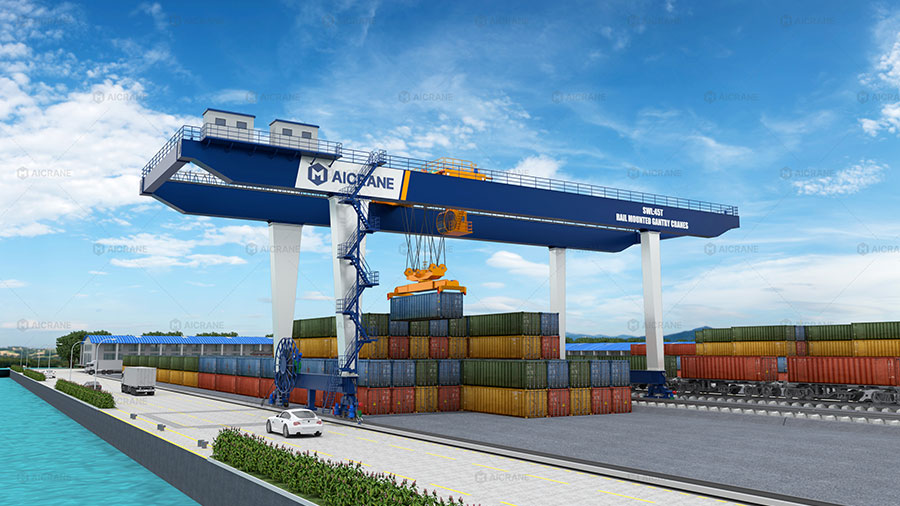
4. Durability in Harsh Port Environments
Ports present some of the most challenging operating environments for heavy equipment. Salt air, humidity, extreme temperatures, and dust all accelerate corrosion and wear. From a sustainability perspective, premature degradation leads to increased maintenance, higher material consumption, and shorter service life.
Modern container port gantry crane design must focus on:
-
Corrosion-resistant structural design
-
Environmentally friendly protective coatings
-
Sealed electrical systems with reduced maintenance needs
-
Long-life components to minimize replacement frequency
While improved durability enhances sustainability, advanced coatings and materials often come at higher costs, forcing designers and buyers to carefully evaluate long-term environmental benefits versus upfront investment.
5. Noise and Environmental Disturbance
Noise pollution is an often-overlooked sustainability issue in container gantry crane design, particularly for ports located near urban areas. Gantry travel mechanisms, trolley systems, and braking operations can generate significant noise, affecting nearby communities and port workers.
Design challenges include:
-
Reducing mechanical noise without sacrificing performance
-
Designing low-noise drive systems and wheel assemblies
-
Implementing vibration-damping structures
-
Ensuring compliance with increasingly strict noise regulations
Noise reduction solutions may increase design complexity and cost, but they are essential for sustainable port development and community acceptance.
6. Space Efficiency and Yard Optimization
Sustainability in container handling is not only about energy and emissions – it also involves land use efficiency. Ports are often constrained by limited space, and inefficient yard layouts can increase crane travel distances, energy consumption, and operating time.
Modern gantry crane design must support:
-
High stacking density
-
Automated or semi-automated operation
-
Precise positioning to reduce re-handling
-
Integration with terminal operating systems (TOS)
Designing cranes that enable smarter yard layouts helps reduce overall environmental impact, but requires close coordination between crane designers, port planners, and automation providers.
7. Automation and Digitalization Challenges
Automation offers significant sustainability benefits by improving efficiency, reducing human error, and optimizing energy use. However, integrating automation into container gantry crane design presents its own challenges.
Key issues include:
-
Increased system complexity and energy demand from sensors and control systems
-
Cybersecurity and system reliability concerns
-
Compatibility with existing manual or semi-automated infrastructure
-
Training and workforce transition requirements
Designers must ensure that automation genuinely contributes to sustainability rather than simply shifting energy consumption to other systems.
8. Lifecycle Sustainability and End-of-Life Management
A truly sustainable container gantry crane design considers the entire lifecycle—from manufacturing and installation to operation, maintenance, and eventual decommissioning.
Lifecycle-related challenges include:
-
Designing cranes for easy maintenance and component replacement
-
Enabling retrofitting and upgrading instead of full replacement
-
Facilitating disassembly and recycling at end of life
-
Reducing environmental impact during dismantling and transport
Modular designs and standardized components can significantly improve lifecycle sustainability, but require careful planning during the initial design phase.
9. Cost vs. Sustainability Trade-Offs
Perhaps the most complex challenge in modern container gantry crane design is balancing sustainability with economic realities. Many environmentally friendly technologies increase initial capital expenditure, even though they reduce long-term operating costs and environmental impact.
Designers and manufacturers must:
-
Clearly demonstrate lifecycle cost benefits
-
Provide flexible, scalable sustainability options
-
Align crane designs with port sustainability strategies
-
Support operators with data-driven performance monitoring
Without clear economic justification, even the most sustainable designs may struggle to gain market acceptance.
Conclusion
Sustainability challenges in modern container gantry crane design are multifaceted, involving energy efficiency, emissions reduction, material optimization, durability, noise control, automation, and lifecycle management. As ports worldwide pursue greener and more resilient operations, gantry crane design must evolve to meet these demands.
The future of container gantry cranes lies in intelligent, energy-efficient, durable, and adaptable designs that balance performance with environmental responsibility. By addressing sustainability challenges at the design stage, manufacturers and port operators can achieve long-term operational efficiency while contributing to global environmental goals.