The capacity of an asphalt plant is not determined by its rated output alone. Drum dimensions, mixer volume, heating efficiency, aggregate flow, and material residence time all influence how much hot mix asphalt a plant can deliver consistently. When selecting a drum mix asphalt plant, understanding the relationship between equipment size and production demand helps contractors avoid bottlenecks, unnecessary fuel consumption, and uneven output. The same principle applies to an asphalt mixing plant designed for highway construction, urban road maintenance, or remote infrastructure projects. The right configuration balances production speed with the quality and consistency required at the job site.
How Drum Size Determines Asphalt Plant Capacity
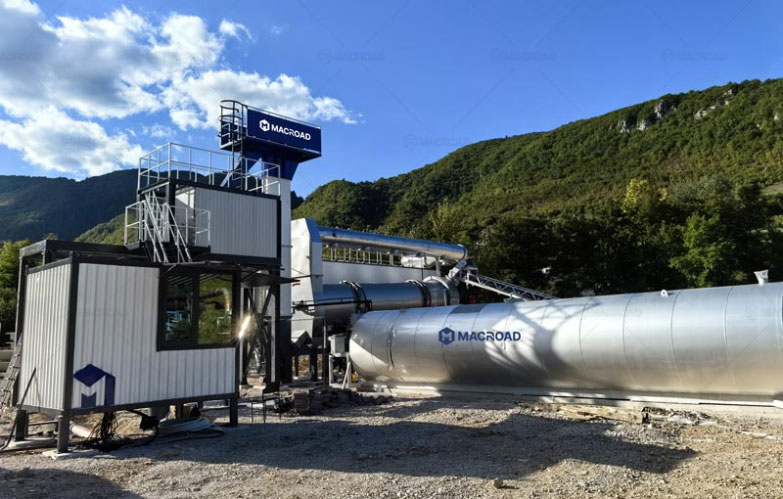
In a drum mix asphalt plant(planta de asfalto continua), drying, heating, and mixing typically take place continuously inside a rotating drum. Its dimensions influence aggregate processing capacity, heat transfer, and material residence time.
Drum Diameter and Length
A larger drum can accommodate more material and provide greater surface area for heat exchange. However, increasing drum dimensions does not automatically increase usable production capacity.
- Diameter: A larger diameter can increase material-handling volume and support higher aggregate throughput.
- Length: A longer drum can provide additional time for aggregate drying and heating.
- Internal flights: Their arrangement affects aggregate movement, material curtains, and heat transfer efficiency.
- Rotation speed: Drum speed influences material movement and residence time, affecting the balance between heating and continuous discharge.
For example, wet aggregate may require more drying time than dry material. Even a large drum can struggle to maintain its rated output when moisture levels are high or the burner cannot supply sufficient heat.
Material Residence Time and Production Stability
The objective is not simply to move more aggregate through the drum. Materials must reach the required temperature and achieve consistent mixing before discharge. If throughput increases beyond the drum’s effective processing capacity, the aggregate may leave insufficiently heated, or fuel consumption may rise as operators compensate for reduced thermal efficiency.
Therefore, drum size should be evaluated alongside aggregate moisture, burner capacity, ambient conditions, and the target asphalt temperature.
How Mixer Size Affects Batch Mix Asphalt Plant Output
Unlike continuous drum systems, a batch mix asphalt plant produces asphalt in separate cycles. Aggregate is dried and heated before being screened, weighed, and transferred to a pugmill mixer, where it is combined with bitumen and other specified materials.
Mixer Volume and Batch Production
The effective mixer volume determines how much material can be mixed in each cycle. A larger mixer can process more material per batch, provided the weighing, hot aggregate storage, bitumen supply, and discharge systems can support the increased volume.
Actual output depends on both batch size and cycle duration:
Hourly production = Output per batch × Batches per hour
Suppose an asphalt mixing plant(planta mezcladora de asfalto) produces 1.5 tonnes per batch and completes 40 batches per hour. Its theoretical output is 60 tonnes per hour. If the same mixer processes 2 tonnes per batch at the same cycle rate, theoretical output increases to 80 tonnes per hour.
In practice, loading, mixing, discharge, maintenance interruptions, and material availability reduce achievable output. The example illustrates the effect of batch size, not a guaranteed production rate.
Why Oversized Mixers May Not Improve Output
An oversized mixer cannot compensate for slow aggregate screening, insufficient hot bins, limited bitumen pumping capacity, or long weighing cycles. If upstream equipment cannot deliver materials quickly enough, the mixer may spend more time waiting than mixing.
A properly sized mixer should accommodate the required batch weight while maintaining effective agitation and the specified mixing time. This helps preserve uniform coating and consistent asphalt quality.
Drum Mix vs. Batch Mix: Which Size Configuration Works Better?
Choosing between continuous and batch production requires more than comparing rated tonnes per hour.
| Factor | Drum Mix Asphalt Plant | Batch Mix Asphalt Plant |
|---|---|---|
| Production method | Continuous | Separate batches |
| Capacity driver | Drum processing and thermal capacity | Mixer volume and cycle time |
| Production flexibility | Suited to sustained production | Well suited to frequent mix changes |
| Main bottleneck | Drying, heating, and aggregate feed | Screening, weighing, and mixing cycles |
| Typical priority | Consistent, high-volume output | Flexible production and precise batch control |
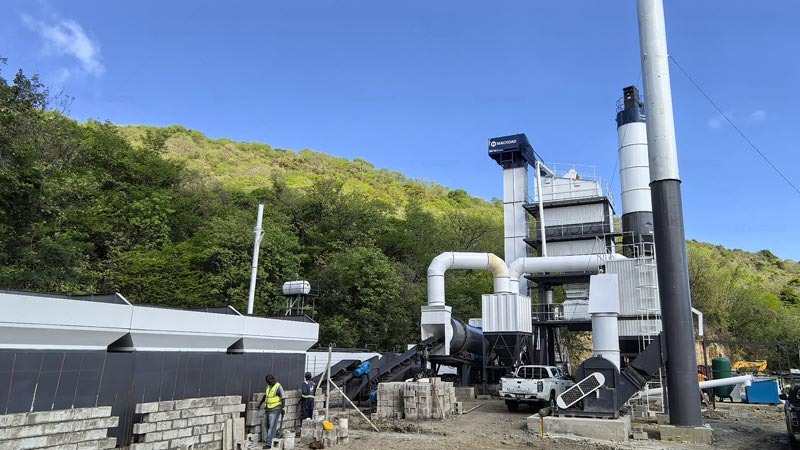
A drum mix asphalt plant can be attractive for projects requiring a steady supply of a relatively consistent mix. A batch mix asphalt plant may be more suitable when different aggregate gradations or asphalt formulations must be produced throughout the day.
Both configurations can support substantial production volumes. The appropriate choice depends on project specifications, operating schedules, and the complete plant configuration rather than drum or mixer size alone.
Does Plant Mobility Affect Effective Capacity?
A mobile asphalt plant introduces another consideration: production capacity must be evaluated alongside transport, installation, and site conditions.
Transportable Design and Site Readiness
A mobile asphalt plant(planta asfáltica móvil) can reduce relocation time between projects, but compact equipment does not necessarily produce more asphalt per hour. Its practical advantage may come from spending less time on setup and moving closer to the construction site.
Contractors should assess road access, foundation requirements, power availability, aggregate stockpiles, and fuel logistics before choosing a mobile configuration. These factors determine how quickly the plant can begin operating and whether it can sustain the expected output.
Capacity Under Real Job-Site Conditions
Remote projects may face limited aggregate supply, variable moisture, restricted truck access, or unreliable power. Even a high-capacity asphalt mixing plant can experience low effective production if trucks cannot remove finished asphalt fast enough.
A useful planning approach is to calculate required hourly output from paving demand, then verify that material supply, plant processing, and truck transportation can all support it.
A Practical Method for Selecting Drum or Mixer Size
Before investing in an asphalt mixing plant, evaluate these five factors:
- Required production rate: Estimate hourly and daily asphalt demand based on the paving schedule.
- Aggregate moisture: Account for the additional drying energy and processing time associated with wetter materials.
- Mix specifications: Consider gradation, binder content, temperature requirements, and the frequency of mix changes.
- Supporting equipment: Check whether feeders, screens, storage bins, weighing systems, burners, and conveyors match the target output.
- Operating conditions: Allow for maintenance, material interruptions, transport delays, and seasonal changes.
Ask suppliers to distinguish rated capacity from expected operating output under your actual conditions. Request details about the aggregate moisture assumption, fuel consumption, available mix types, and production performance at different operating loads.
The most effective asphalt plant is not necessarily the one with the largest drum or mixer. It is the configuration that consistently delivers the required asphalt quality at a production rate aligned with paving demand and operating costs. By evaluating equipment dimensions together with thermal performance, cycle time, material logistics, and site constraints, contractors can select a drum mix asphalt plant, batch mix asphalt plant(planta de asfalto discontinua), or mobile asphalt plant that supports reliable production throughout the project lifecycle.