When selecting an industrial RTG crane, planning for future capacity means sizing more than the crane’s rated lifting load. The equipment should accommodate expected changes in load weight, handling frequency, stacking height, yard layout, and operating intensity over its service life. A crane sized only for the current workload may become a bottleneck when production expands or heavier loads are introduced.
The practical approach is to define both the current operating requirement and the expected future requirement, then compare options based on rated load, duty cycle, lifting height, span, travel performance, control configuration, power system, and structural limits. The objective is not simply to choose the largest RTG available. Oversizing can increase cost and infrastructure requirements without creating useful capacity, while undersizing can limit future operations.
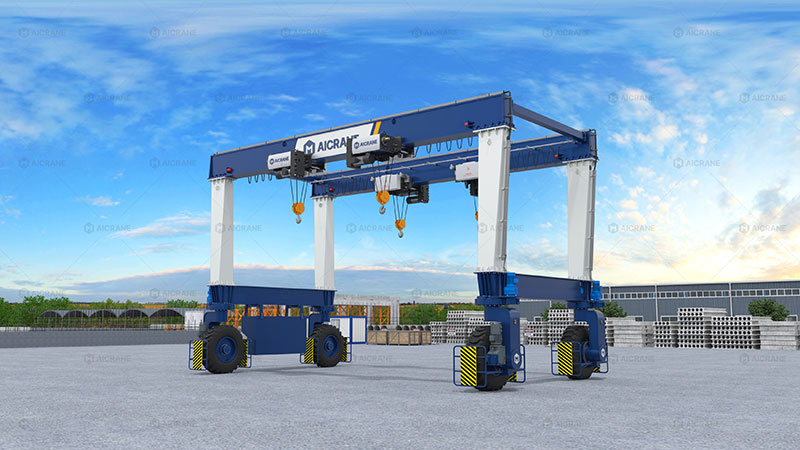
What Does “Future Capacity” Mean for an RTG Crane?
Future capacity can refer to several different requirements, and they should be evaluated separately.
Future lifting load
The first consideration is the maximum load the RTG rubber tyred gantry crane may need to handle. This includes the load itself and, where applicable, the lifting attachment or spreader.
For example, a yard may currently handle loads within a moderate weight range but have plans to introduce heavier components, larger containers, steel products, precast elements, or other industrial materials. In that situation, the crane’s future rated capacity should be based on the actual planned load profile rather than today’s average load.
However, the maximum possible load is not automatically the correct basis for selection. Engineers should determine:
- Normal working load
- Maximum routine load
- Occasional peak load
- Load dimensions and center of gravity
- Required lifting attachment or spreader
- Frequency of heavy-load operation
A crane that occasionally handles a heavy load has different operating requirements from one that performs heavy lifting continuously.
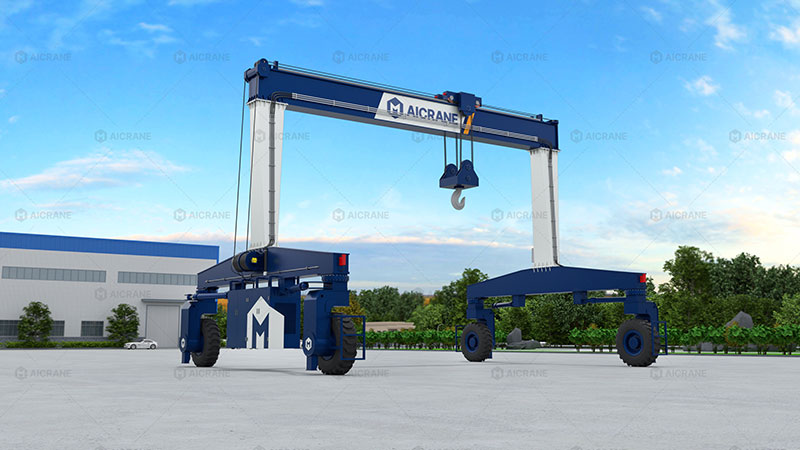
Future throughput
Lifting capacity and throughput are not the same thing.
A crane may have sufficient rated capacity but still fail to meet future production targets because it cannot complete enough handling cycles within the required operating period.
Future throughput depends on factors such as:
- Hoisting and lowering speed
- Trolley travel speed
- RTG travel speed
- Load positioning time
- Operator visibility and controls
- Automation or semi-automation features
- Yard congestion
- Number of required handling cycles
For this reason, buyers should not evaluate an industrial RTG crane only by asking, “How many tons can it lift?” The more useful question is, “How many required moves can it complete reliably during the planned operating period?”
How Should Buyers Forecast Future RTG Crane Requirements?
A future-capacity plan should begin with the expected operating scenario rather than a single load rating.
1. Identify current operating conditions
Document how the mobile gantry crane will actually be used today. At minimum, define the current:
- Maximum load
- Typical load
- Lifting height
- Span
- Number of storage positions or operating bays
- Daily operating hours
- Handling cycles or moves per hour
- Travel distance
- Load type
- Outdoor environmental conditions
This establishes the baseline for comparison.
2. Define the expected growth scenario
Next, identify what could change during the planned service life of the RTG.
Potential changes include increased production, additional storage lanes, larger containers, heavier components, higher stacking requirements, longer operating hours, or more frequent crane utilization.
A simple planning model can use three scenarios:
Current case: what the crane must handle when it enters service.
Expected case: the workload and load profile management reasonably expects during expansion.
Upper planning case: a credible higher-demand scenario that may affect crane configuration even if it does not justify maximum-rated equipment today.
This method prevents buyers from basing a long-term equipment decision on a single optimistic or conservative estimate.
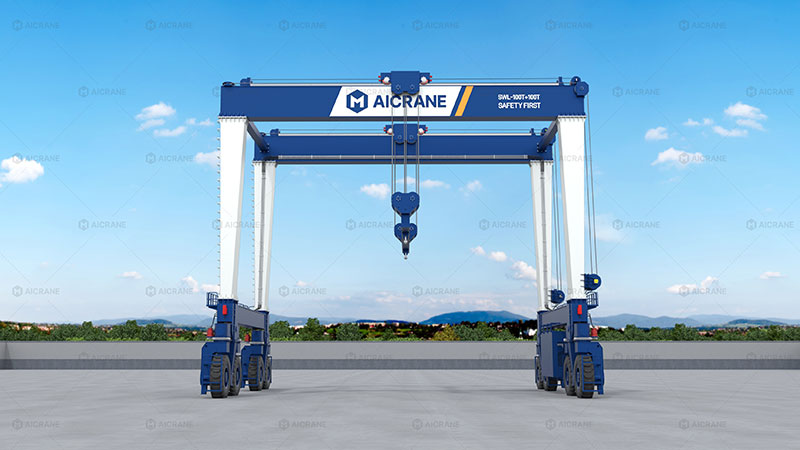
Should You Choose a Higher RTG Rated Capacity for Future Growth?
Not necessarily. A higher rated capacity is useful only when the future load profile justifies it.
Suppose an operation currently handles loads of around 30 tons and expects heavier loads after expansion. Choosing an RTG with a capacity comfortably above the expected future working load may provide useful flexibility.
But the purchase should be based on engineering requirements, not simply selecting the highest available rating.
A higher-rated crane can affect:
- Structural design
- Wheel loads
- Ground pressure
- Drive and braking requirements
- Power demand
- Yard pavement requirements
- Maintenance requirements
- Initial equipment cost
The correct question is therefore not “Can we buy a larger crane?” but “What future load range is technically and economically credible?”
Plan Future Capacity Around the Entire Load Path
An RTG crane operates as part of a system. Increasing the crane’s lifting capacity does not automatically increase the capacity of the surrounding yard.
Yard pavement and ground conditions
Higher crane loads can increase wheel loads and impose greater demands on the operating surface.
Before specifying the crane, engineers should verify that the pavement, foundation, compaction, drainage, and running surface are compatible with the expected wheel loads and operating conditions.
This is particularly important when future expansion is expected. A crane upgrade may become impractical if the original yard surface cannot support the increased loads.
Yard width and span
The required RTG span determines how many lanes, storage rows, traffic paths, or operating areas can be covered.
Future changes to the yard layout should therefore be considered at the equipment-selection stage.
For example, a crane that fits the current storage arrangement may become restrictive if an additional container row, truck lane, or service area is added later.
A future-capacity plan should answer:
- What area must the RTG cover now?
- What area may it need to cover later?
- Is the future layout physically compatible with the crane?
- Will additional rows require a wider span?
- Will traffic patterns change the required clearances?
Increasing span later may involve substantial engineering work and may not be practical without major modifications.
Lifting Height Should Also Be Planned for Future Operations
Future capacity includes vertical capacity.
An operation may begin with a relatively low stacking requirement but later increase stacking height to improve storage density. The RTG therefore needs enough lifting height and structural clearance to accommodate the planned storage arrangement.
The required lifting height should account for:
- Maximum stack height
- Load or container dimensions
- Required clearance above the stack
- Trolley and spreader configuration
- Structural clearances
- Future storage changes
A higher lifting height can affect crane dimensions, structural requirements, wind exposure, and operating conditions. It should be specified from the actual yard layout rather than treated as an independent number.
Duty Cycle Can Matter More Than Maximum Load
For future planning, crane duty is one of the most frequently overlooked factors.
Two cranes with the same rated capacity may have very different suitability for a high-utilization application.
An industrial RTG crane used for frequent repetitive handling experiences repeated loading on:
- Hoisting equipment
- Trolley drive
- Crane travel system
- Wheels and axles
- Braking system
- Structural members
- Electrical and control components
Therefore, buyers should specify the expected operating intensity and duty classification rather than focusing only on maximum lifting capacity.
A crane intended for occasional handling and a crane expected to operate for long periods every day should not automatically be treated as equivalent simply because their rated capacities are similar.
How Much Future Growth Should You Build Into the Specification?
Future growth should be based on documented business and engineering assumptions.
Adding excessive capacity “just in case” can lead to unnecessary capital expenditure and infrastructure demands. Conversely, leaving no room for growth can create expensive operational limitations later.
A useful approach is to separate requirements into three categories:
Must-have future requirements
These are requirements that are already supported by the expansion plan, such as a known increase in load weight or stacking height.
Probable future requirements
These are credible changes that have not yet been finalized but could reasonably affect equipment selection.
Optional future requirements
These are possibilities that should not automatically drive the current gantry crane specification unless the cost and technical implications are justified.
This framework helps buyers avoid paying today for uncertain requirements while still protecting against foreseeable expansion.
Consider Throughput, Not Just Rated Tons
For many operations, future capacity is better expressed as handling performance than lifting tonnage.
A crane with sufficient rated load may still become inadequate when the number of required moves increases.
For example, consider a hypothetical yard that currently requires a moderate number of handling cycles per hour but expects substantially higher traffic after expansion. The future problem may not be lifting capacity. It may be crane travel time, positioning time, operator intervention, traffic congestion, or insufficient equipment availability.
This is why a capacity study should consider the complete operating cycle:
Pick-up → hoist → trolley movement → travel → positioning → lowering → release → return movement
Reducing cycle time can increase practical capacity without increasing the crane’s rated lifting load.
Plan for Future Power and Control Requirements
The RTG’s future role may also affect its power and control configuration.
Depending on the application and industrial gantry crane design, buyers may need to consider diesel generator sets, cable reels, battery-based systems, electrical supply arrangements, energy-management systems, or other power configurations.
Future operational changes can increase:
- Daily operating hours
- Peak electrical demand
- Travel frequency
- Regeneration requirements
- Charging requirements for battery-based equipment
Control systems also matter. Features such as anti-sway control, positioning assistance, remote operation, monitoring, or automation may become more valuable as handling volume increases.
The key point is that future capacity planning should consider whether the crane’s electrical and control architecture can support the intended operating model.
What About Maintenance and Availability?
A future-capacity plan should include equipment availability, not simply technical maximums.
As utilization increases, maintenance planning becomes more important. More operating hours and more handling cycles increase the need for inspections, preventive maintenance, spare parts, and service access.
Buyers should therefore examine:
- Maintenance intervals
- Critical replacement components
- Access to motors, brakes, and electrical systems
- Diagnostic and monitoring capabilities
- Spare-parts availability
- Service requirements
- Expected downtime during maintenance
A crane with technically sufficient capacity may not provide sufficient practical capacity if downtime significantly interrupts production.
Example: Matching an RTG to a Growing Industrial Yard
Consider a hypothetical industrial yard that currently handles loads up to 40 tons and plans to increase both production volume and storage density.
The buyer should not simply specify an RTG rated for a higher tonnage.
Instead, the engineering team should evaluate whether future growth involves:
- Heavier loads
- More daily operating cycles
- Greater lifting height
- Increased span
- Longer operating hours
- More frequent travel
- Changes in yard traffic
If the load weight is expected to remain similar but handling volume will increase substantially, improving cycle efficiency and equipment availability may be more valuable than increasing rated capacity.
If both load weight and storage height will increase, the RTG specification may need changes in rated capacity, lifting height, structural design, and power system.
This illustrates why “future capacity” should be treated as a multidimensional requirement.
Questions to Ask Before Purchasing an Industrial RTG Crane
Before finalizing the specification, buyers should be able to answer the following questions:
Load
What is the maximum routine load today, and what is the credible future maximum?
Utilization
How many hours per day will the crane operate, and how many handling cycles are expected?
Yard coverage
What span and travel range are required now, and is the yard likely to expand?
Vertical capacity
What stacking height is needed today, and what future increase is expected?
Environment
What are the wind, temperature, ground, pavement, and operating conditions at the installation site?
System integration
Will the RTG interact with trucks, other cranes, automated systems, transfer equipment, or production lines?
Expansion
Can the selected configuration support future operational changes without major structural or civil modifications?
Lifecycle
What maintenance, spare-parts, and service requirements will result from the expected utilization level?
Final Takeaway: Size the RTG for the Future Operating Model
Planning future capacity when selecting an industrial RTG crane is not simply a matter of adding more tons to the rated load. The correct specification should reflect the future relationship between load, throughput, lifting height, span, utilization, yard conditions, power, controls, and maintenance requirements.
The best planning method is to establish the current operating case, document credible future changes, identify which requirements are certain or probable, and then assess how those changes affect the complete RTG system.
A crane that matches only today’s workload may become a constraint as the operation expands. A crane selected far above realistic future requirements can create unnecessary cost and infrastructure demands. The objective is to define a technically justified capacity range that supports current operations while leaving practical room for the growth the project can reasonably anticipate.